
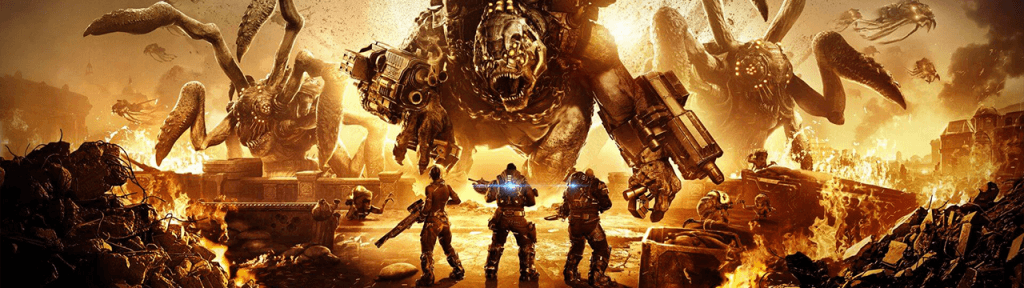
Gears Tactics
Splash Damage
|
Lead Level Designer
Project Overview
Following the release of Star Citizen 2.6, I sought a new challenge and joined Splash Damage. The studio was of particular interest to me because of its roots in the modding scene – a background I also share.
Gears Tactics is a turn-based tactical take on the Gears of War franchise, a series I’d closely followed since its beginnings in 2006. Being part of the project was an awesome opportunity, particularly as it brought a familiar universe into a very different genre.
I started as a Senior Level Designer on the vertical slice, building much of the early content before progressing to Lead Level Designer during full production. My focus shifted towards creating archetype level pieces that would guide the rest of the team, whilst overseeing level design across the campaign.
Lead Level Designer
Splash Damage
Unreal Engine 4
28 April 2020
PC, Xbox Series X|S, Xbox One

Responsibilities
My core responsibility on Gears Tactics was to lead the level design team in delivering a dynamic, single-player campaign that supported multiple playthroughs and player types. I managed the team’s workload and priorities throughout production, ensuring our work aligned with project and publisher milestones.
I was also responsible for running the Missions Team, a multidisciplinary group spanning art, narrative and design. The team provided a shared channel for communication and decision-making, helping establish common goals and maintain alignment across disciplines.
- Led the level design team in delivering the single-player campaign
- Responsible for the quality of the campaign’s level and mission design throughout development
- Ran the multidisciplinary Missions Team, spanning art, narrative and design
- Designed and implemented level and mission content from blockout through to final
- Mentored and trained junior level designers
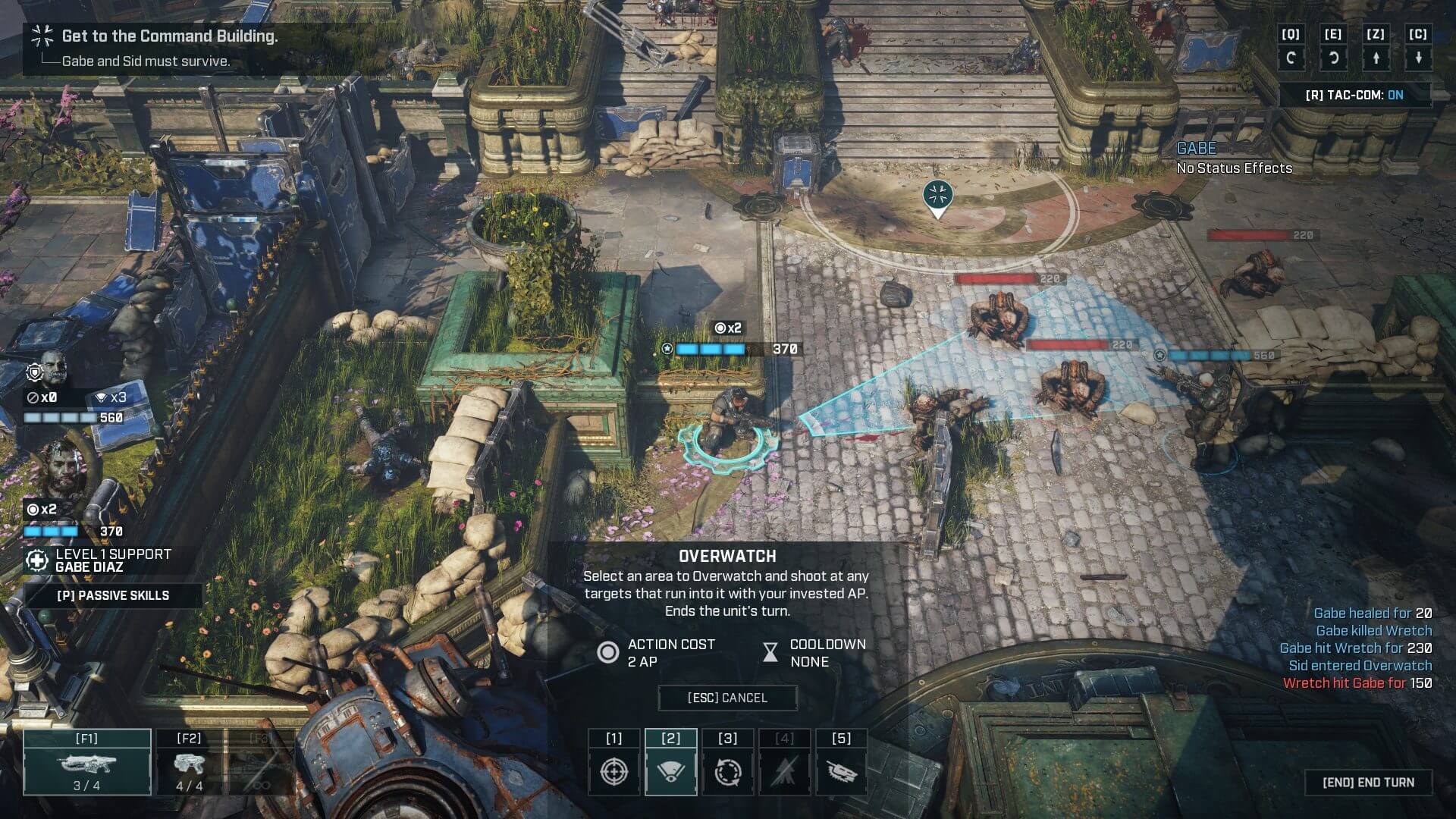
Initially, my role consisted of exploring level design within the turn-based tactics genre. This took the form of blockout experiments, testing different forms and scales to determine what best supported the combat loop.
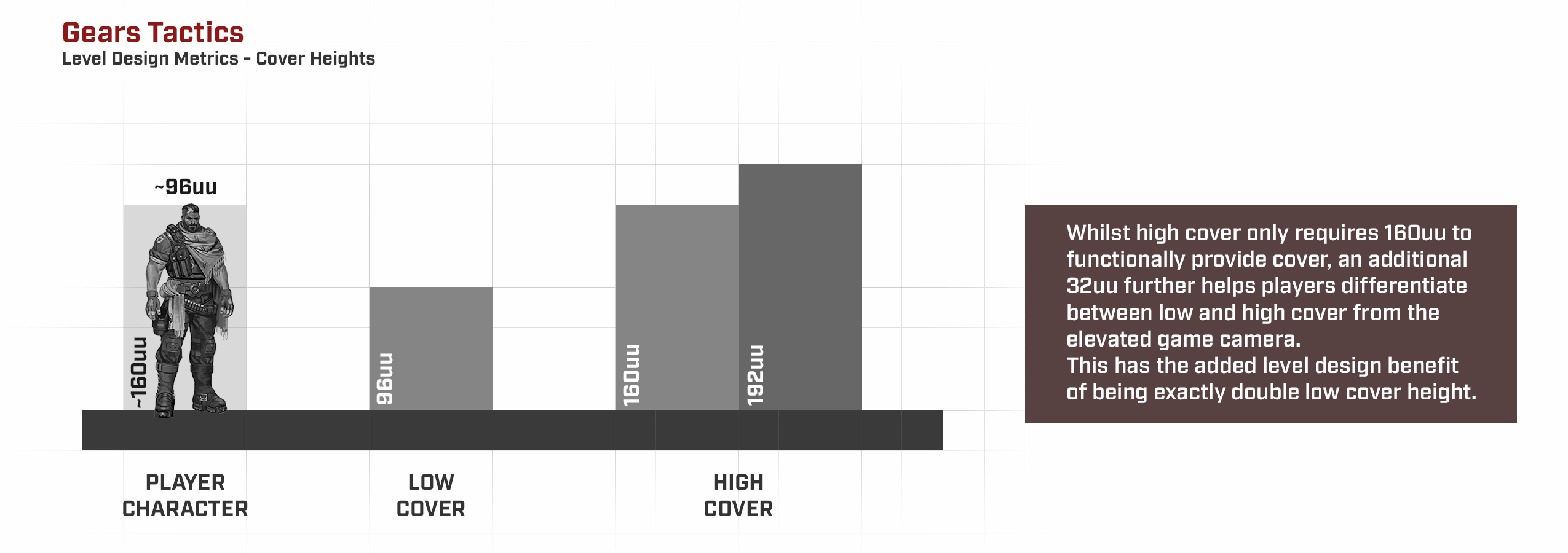
As gameplay systems matured, design exploration progressed into defining a set of metrics to guide level production (example above). Much of this mechanical and content exploration took place during the early stages of production, culminating in the completion of the vertical slice.
Vertical Slice
My work on the vertical slice began by bringing a fresh perspective to an existing level blockout, created before I joined the project. I was tasked with taking the level from a prototype state through to something that could be tested, refined and ultimately presented as a representative slice of the game.
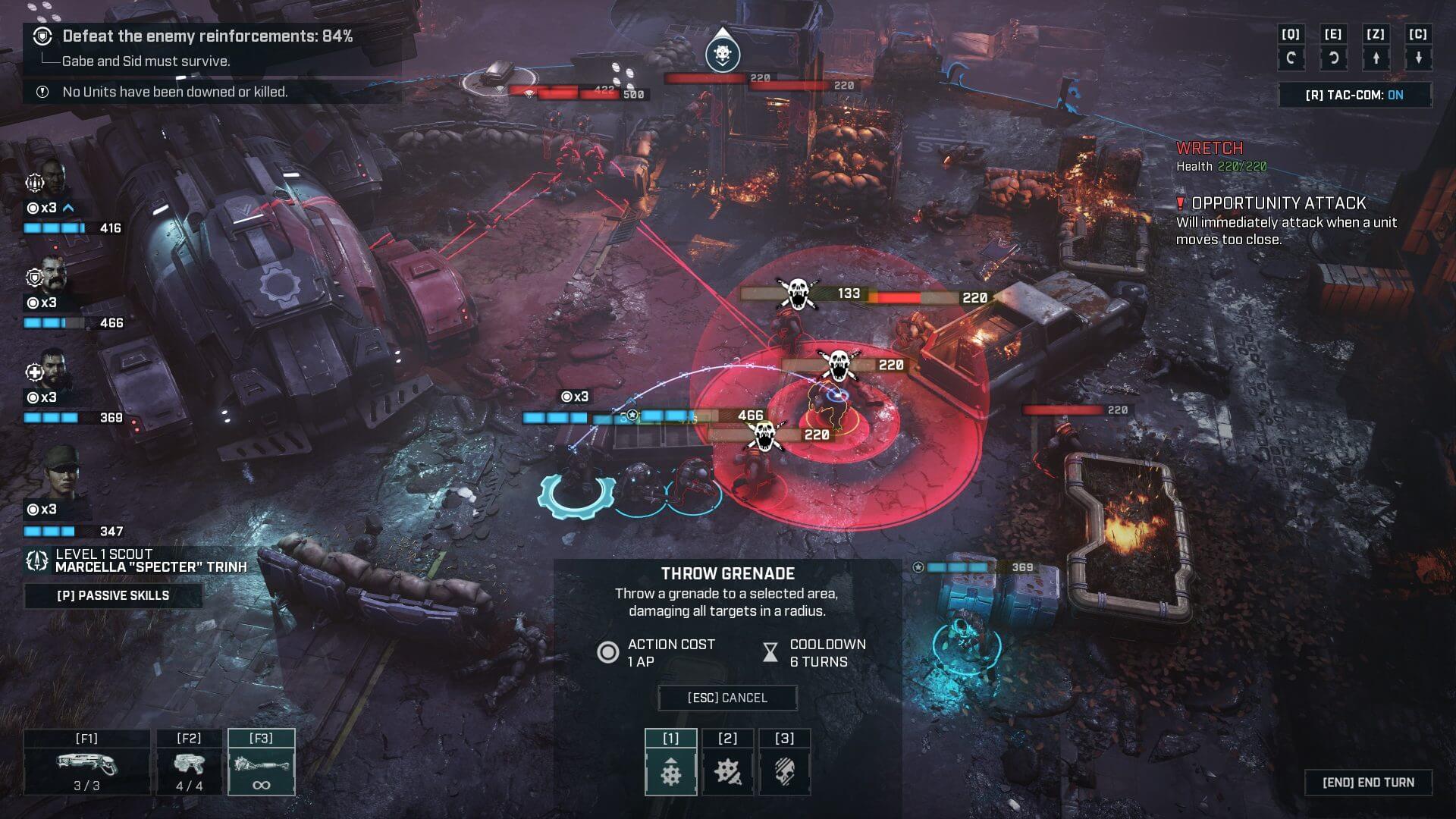
I began fleshing out the level by splitting the gameplay into a series of sequential beats, each with its own theme, i.e. close quarters, long range, rush, etc. These themes encouraged different styles of play, creating a varied sequence of challenges whilst making each encounter identifiable and memorable. This was achieved through a combination of architecture, enemy placement and a curated mix of enemy archetypes.
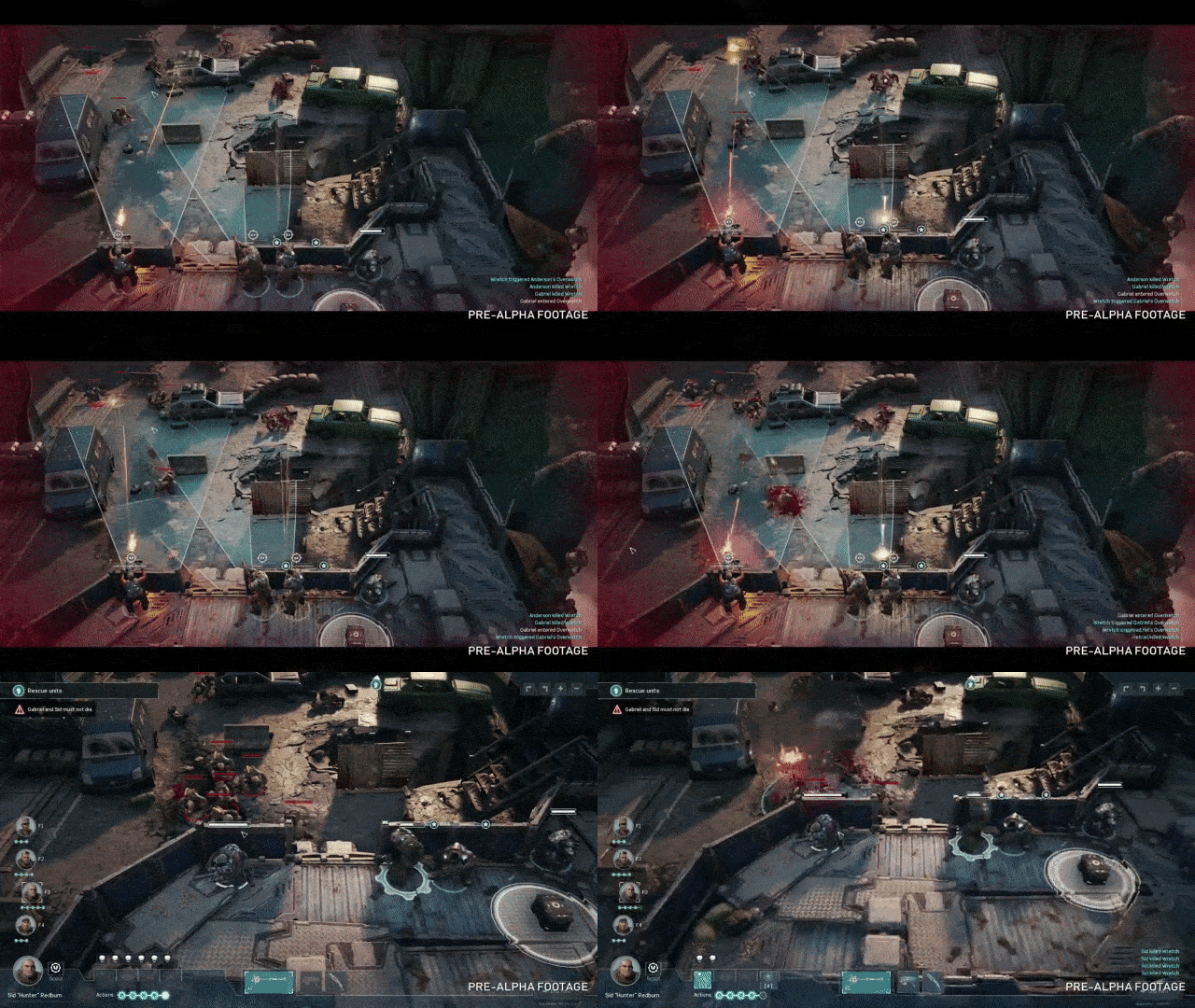
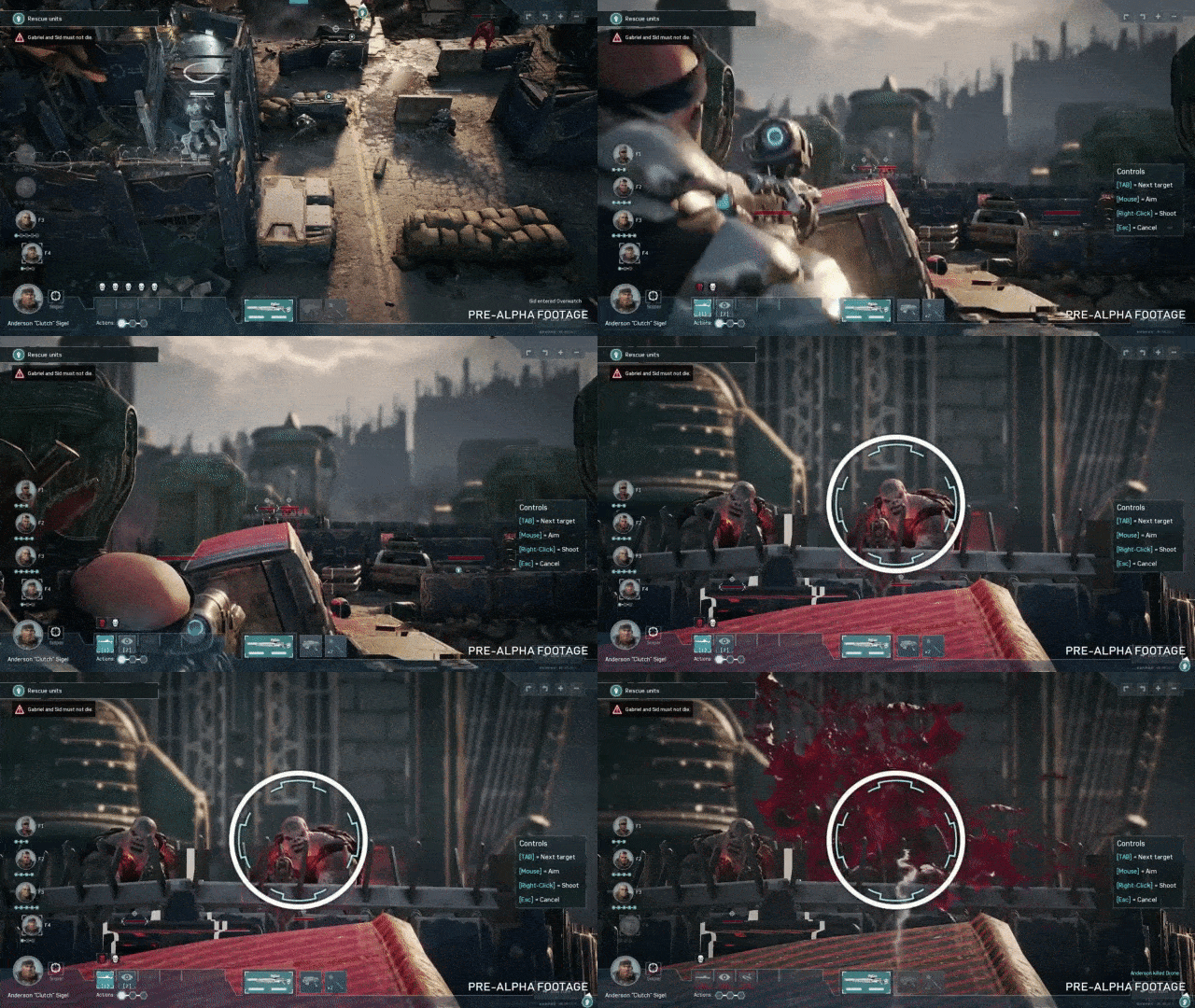
As encounter design developed, I introduced several points of verticality. Some favoured the player, providing a vantage point for their sniper, whilst others created challenges by placing enemies in commanding positions that complemented their archetype.
I also introduced breathers between encounters (known within the Gears series as “guitar strings”). This is where a guitar riff plays over the soundtrack following the elimination of the final threat in an area, thus signifying a moment of downtime. Building these pauses into the level gave players the opportunity to regroup, reposition their units and take stock before moving to the next encounter.
Alongside the bespoke campaign level, the vertical slice included a number of “remix maps”. These were used to test the semi-procedural level system and explore more diverse layouts than was practical within a single authored level.
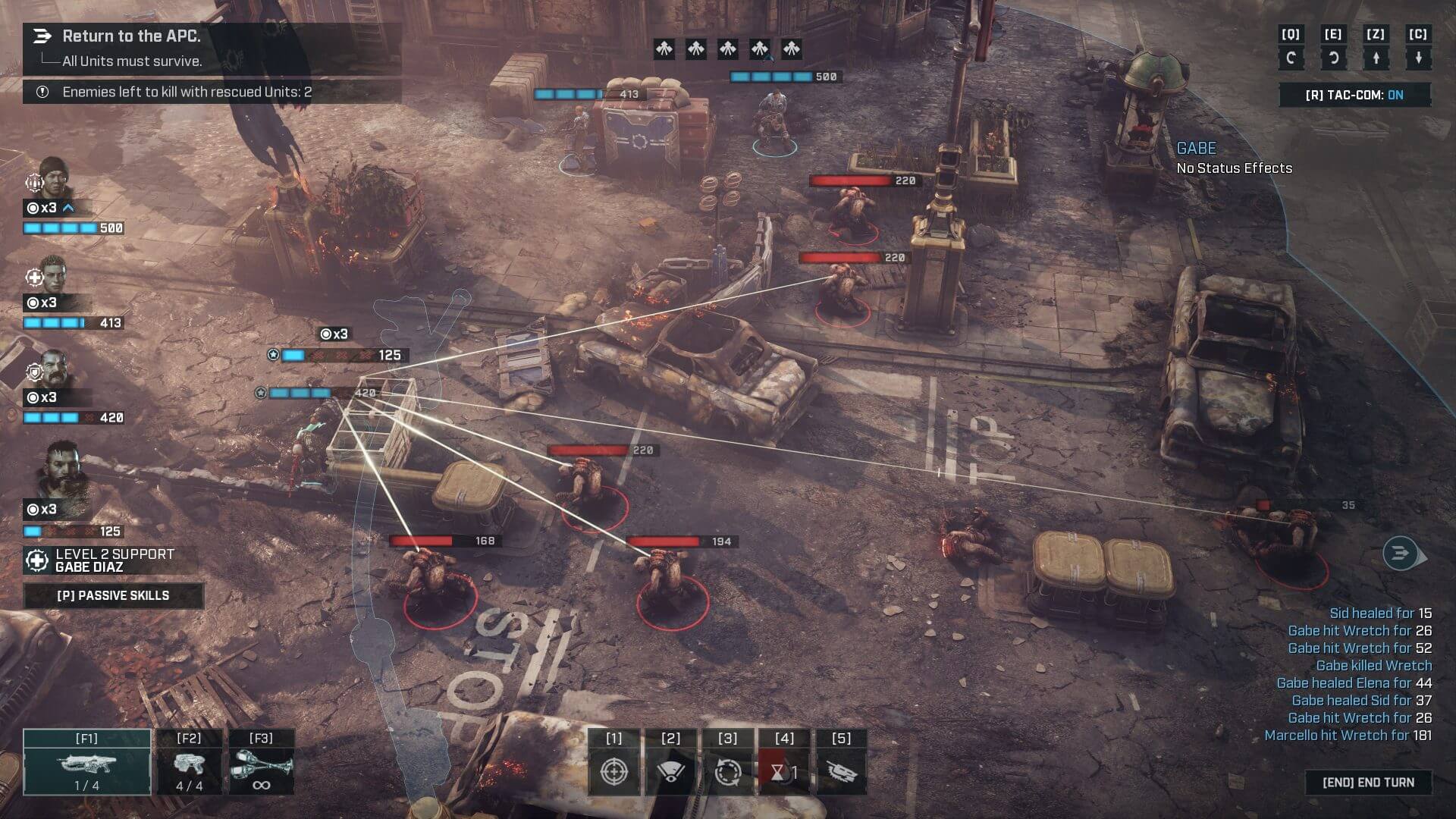
Perhaps the most important area of exploration was establishing the limits imposed by the game’s elevated camera. Early testing demonstrated that multiple overlapping floors should generally be discouraged. Whilst potentially interesting spatially, having floors above floors compromised the player’s ability to clearly read the tactical state (referred internally as tactical clarity – one of the guiding level design pillars). Discoveries such as this helped establish principles that would inform level production throughout the campaign.
The Campaign
When it came to building the campaign for Gears Tactics, I took a “lead by example” approach. The majority of my hands-on work was during the prototyping of each new batch of content, such as the introduction of an additional biome or mission archetype.
I worked with other disciplines within the Missions Team, including narrative, concept and art, to establish the requirements for each new batch of content and develop a brief. From there, I built templates and level patterns that formed a foundation for the level design team to build upon and improve.
Every new biome required extensive testing and blockout exploration to determine how its visual identity, geometry and gameplay requirements could work within existing systems. As production expanded, my involvement increasingly shifted towards supporting the wider level design team, reviewing their work and maintaining consistency across the campaign.
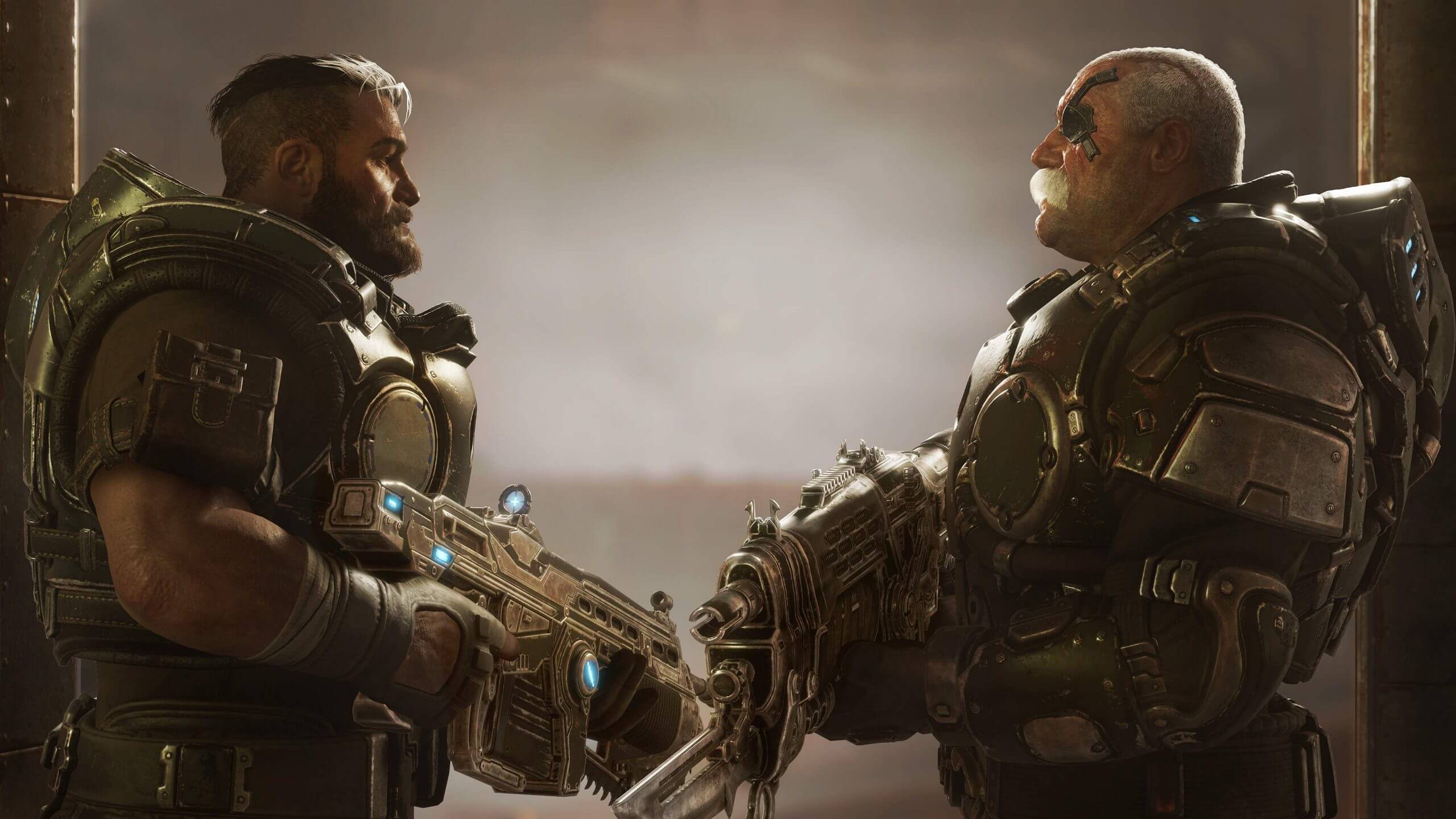
Levels in Gears Tactics weren’t built using conventional methods, but rather semi-procedural collections of gameplay tiles. The process of building these tiles and assembling them into levels is explored in more detail in Splash Damage’s Blocktober article on Gears Tactics.
During the latter stages of development, I was responsible for reviewing, providing feedback on and signing off levels and missions produced by the level design team. I also remained hands-on, designing and implementing a number of campaign levels and a series of side missions.
Selected Work
Alongside my responsibilities as Lead Level Designer, I remained hands-on throughout production, designing and implementing campaign levels, gameplay tiles and side missions.
- “Zero Hour”
- “Left Behind”
- “On The Trail”
- “Into The Fire”
- “Taking Stock”
- “Cover of Darkness”
- “Finders Keepers”
- …and roughly 10 side missions across the campaign!
Some of my gameplay tiles were featured in a Gears Tactics Art Blast on ArtStation.
Game Trailer
Reception
Gears Tactics launched as the top-selling game on Steam and the most-played title on Xbox Game Pass for PC, while earning a Metacritic score of 80 and an OpenCritic score of 82. The game was also nominated for Best Sim/Strategy at The Game Awards 2020.
Gears Tactics remains my proudest professional achievement.