It’s late 1996. John Major is serving his penultimate year as prime minister, GM foods are now on sale in the UK, Jon Pertwee, the Third Doctor, has died, and Pierce Brosnan is our new James Bond.
I am 11 years old. I am travelling to the Merry Hill Shopping Centre in Dudley with a £20 note clutched tightly in my fist. I’m going to buy a video game.
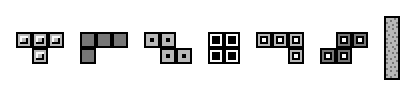
During the one-and-a-half-hour drive, I play nothing but Tetris on my Game Boy. Tetris is a fantastic game. A perfect game. But I’ve finished every other Game Boy game I own. Tetris is all I have left, and Tetris never ends.
No, in 1996 I wasn’t good enough to see the rocket launch.
Yes, I have since remedied this.
What I need is a new Game Boy game. What I need is adventure. More specifically, I am on the hunt for The Legend of Zelda: Link’s Awakening.
The Legend of Zelda
In my formative years, I was a huge fan of the Zelda series; we’re talking stickers on my bedroom door and magazine cutouts up on the wall. I adored it. The Legend of Zelda was the third game to grace my Nintendo Entertainment System, after Super Mario Bros. and Castlevania. Thinking back, it was too difficult for me at the time. I can’t recall the core struggle, but I likely lacked the discipline to solve the more cryptic aspects of the game (this was also an issue in the rather impenetrable Castlevania II: Simon’s Quest).
Even so, I loved Zelda’s sprawling map, with its caves and dungeons to explore. Every screen was littered with enemies to fight or people to interact with. To me, it was light years ahead of Super Mario Bros. It wasn’t simply a game. It was a world.
I was fascinated by the concept of inventories, currency and merchants.
To this day, I believe The Legend of Zelda is to blame for my item hoarding in video games. I would hoard special ammunition and expensive items, instead relying on my default weapons until the end of the game.
Inevitably, I would finish without ever using the things I had saved. It always felt bad, and it’s an annoying habit that I have yet to shake, even decades later. Every Resident Evil game brings out the worst of it too…
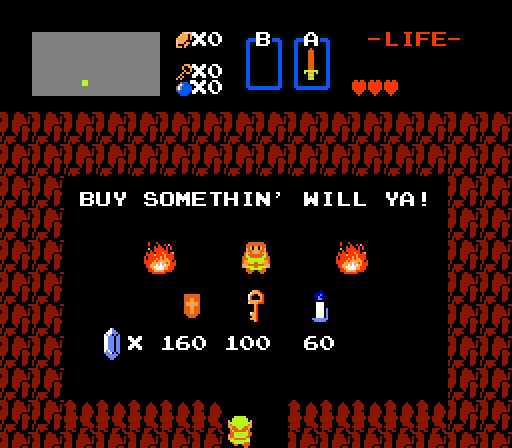
Years later, I replayed it on the GameCube’s Zelda compilation disc, then more recently through the Nintendo Switch Online NES library. I currently have a save at the final dungeon, the furthest I have ever reached!
It’s not bad going back. It’s a little dated, but clearly features the foundations that the franchise is still known for. Many of these foundations are still present throughout the series, even in titles that twist convention, like Breath of the Wild.
A Link to the Past
Truth be told, my love of the franchise wasn’t cemented until A Link to the Past on the SNES. By the time it was released, I was old enough to fully appreciate how far the series had advanced.
It offered enhanced graphics, more weapons and items, more fully realised characters and an entire light and dark world to explore. Moving between the two introduced environmental puzzles that could only be solved by understanding how one world affected the other. It eventually became a familiar trope, but at the time it gave the world an incredible sense of depth and scope.
One of my first genuine memories of feeling sadness in a video game comes from this relationship between worlds.
In the light world, the Haunted Grove features the ghost of a boy playing a flute. Mysteriously, he vanishes on approach.
However, if you return to this location in the dark world, you meet a creature reminiscent of this ghost. The creature sends you on a short quest between worlds in order to retrieve his flute.
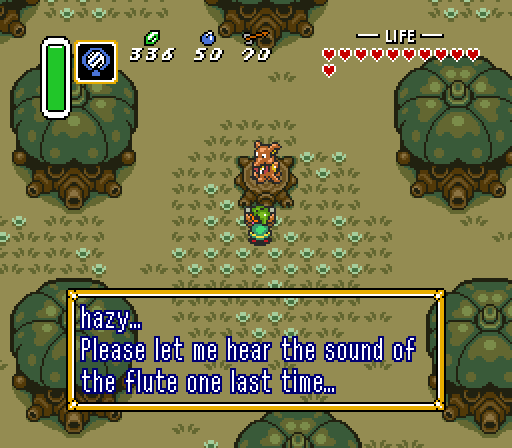
Once you return, he is too deformed by the dark world’s influence to play his flute. He asks you to play the flute for him, at which point he transforms into an inanimate tree…
In retrospect, it may seem twee, but this short vignette hit me hard. It illustrated that a game like Zelda could provide so much more than a gameplay sandbox, and perhaps that video games could make me feel something more than base excitement. This stuck with me. Formative years indeed.
Back to 1996
I have one destination – Electronics Boutique. I split from the family unit and ignore every other shop, making a beeline for its doors. Disaster. It’s £30. It’s out of my budget. I appear in front of my mother and inform her of the distressing news. She tells me it’s £20 over at Index. Jackpot. Thanks, Mum.
I bag Zelda and wish away the time before getting back to the car. There’s a large billboard advertising GoldenEye showings at the cinema. I want to see it, but the last showing is already underway. No matter, I have Zelda. That’s all I care about.
Link’s Awakening
The Legend of Zelda: Link’s Awakening was an odd title and broke some series conventions. The game took place on Koholint Island rather than the series’ usual kingdom of Hyrule, and didn’t feature Zelda or a princess at all. Instead, it featured a Zelda stand-in known as Marin, the daughter of Super Mario lookalike Tarin. Tarin was only the first of several unexpected Nintendo cameos, another oddity where the Zelda series was concerned.
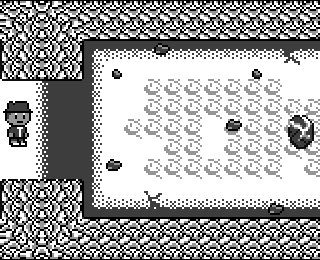
It played similarly to A Link to the Past, with a comparable graphical style. Interestingly, its visuals bear a striking resemblance to the Japan-only Kaeru no Tame ni Kane wa Naru, another of Nintendo’s early Game Boy titles. That sort of rarely documented connection between games fascinates me these days, but at the time games simply felt like magical and unique artefacts.
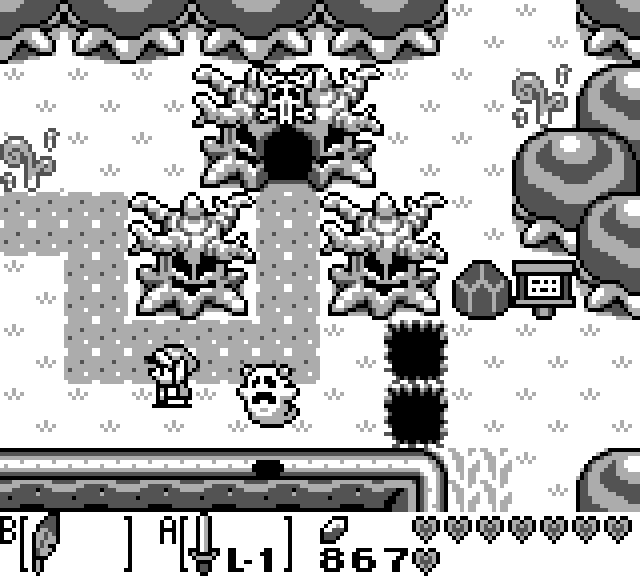
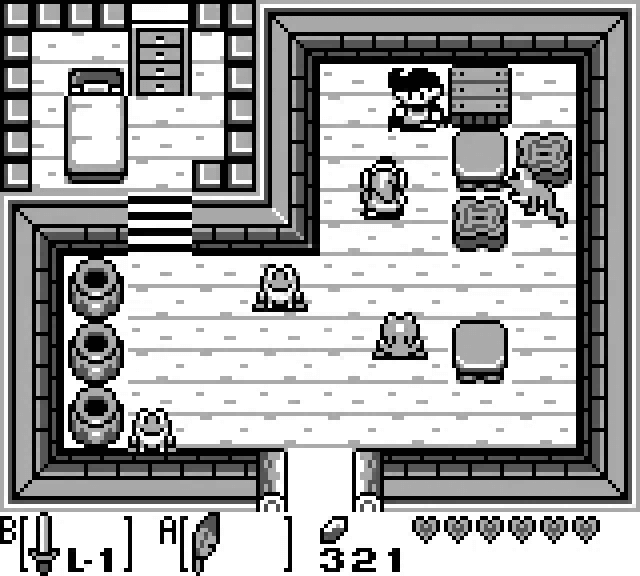
It felt like a miracle: A Link to the Past compressed into the palm of my hand. It had an enormous, interconnected overworld, eight dungeons, strange characters and more secrets than seemed reasonable for a Game Boy cartridge. Each dungeon introduced a new item that changed how I fought, explored and gradually unravelled Koholint. The familiar Zelda rhythm remained: claim each dungeon’s spoils, use them to overcome the challenges within, then unlock the next area of the overworld. Only this time on the Game Boy! Zelda in the palm of your hand! That level of breadth and depth was rarely seen on portable systems in the early 1990s.
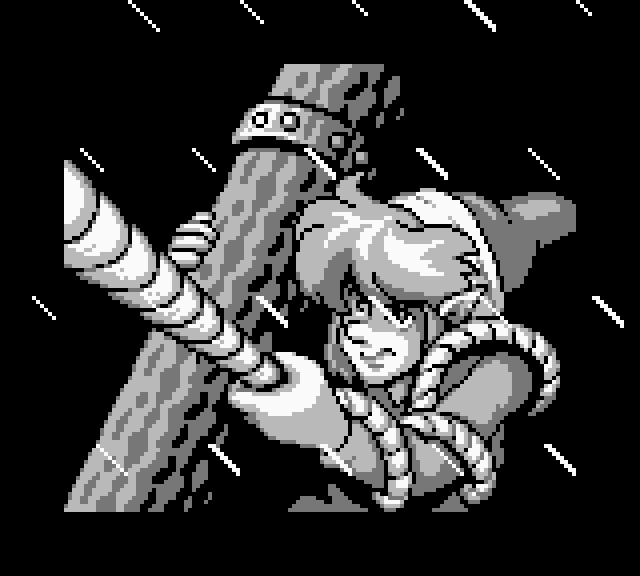

Gameplay varied from the series’ simple top-down combat to fetch quests to dungeon puzzles. One of the most memorable puzzles had you lugging a giant ball above your head and tossing it at a series of pillars to destroy them. Once all of the pillars were destroyed, the top floor of the dungeon dropped and filled the gaps in the floor below. It was interesting to have to think in three dimensions in a two-dimensional game.
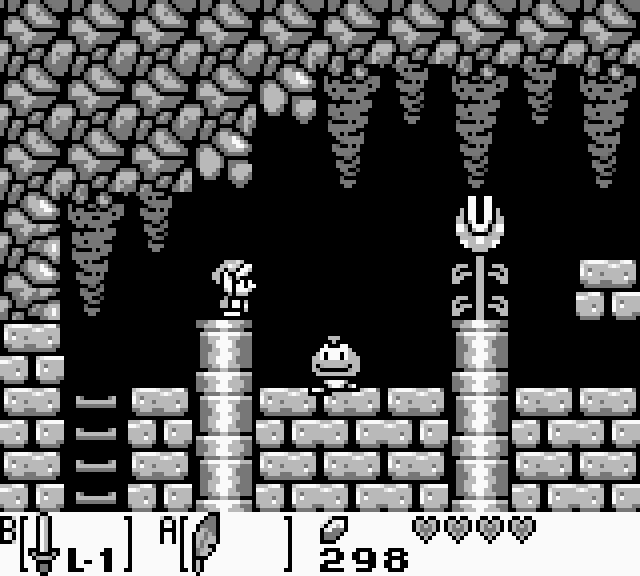
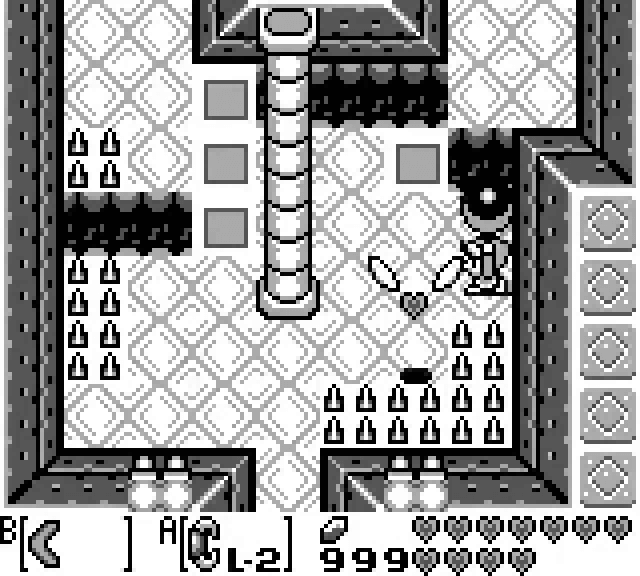
Occasionally, the illusion collided with the Game Boy’s two-button controls. Constantly switching between the game and inventory during boss fights was not unusual.
But most importantly, it lasted. Koholint was enormous, full of secrets, diversions and that now-classic trading sequence. It consumed a heroic quantity of batteries before I finally reached the end.
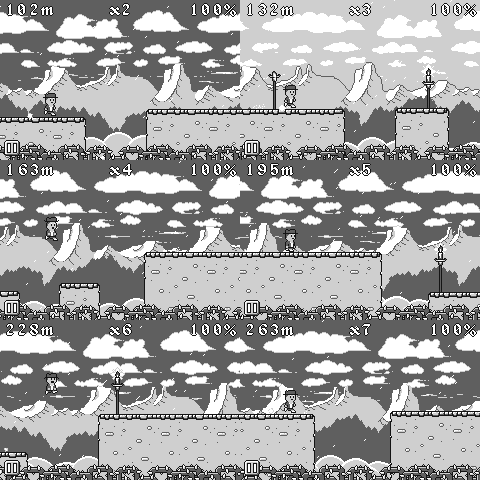
This game was one of my primary inspirations for making my first indie game, Jack B. Nimble. I originally prototyped it as a dungeon crawler with stealth elements, before eventually turning it into an infinite runner. That early connection is another reason Link’s Awakening means so much to me.
Link’s Awakening was re-released for the Game Boy Color with a new colour-based dungeon. Years later, it received a full remake on the Nintendo Switch, sporting toy-like visuals and a heavy tilt-shift that made Koholint resemble a tiny diorama. It just looked adorable, and I enjoyed seeing the island rebuilt as something bright, tactile and new. But for all the remake’s charms, it never quite replaced the version I carried with me…
The Drive Home
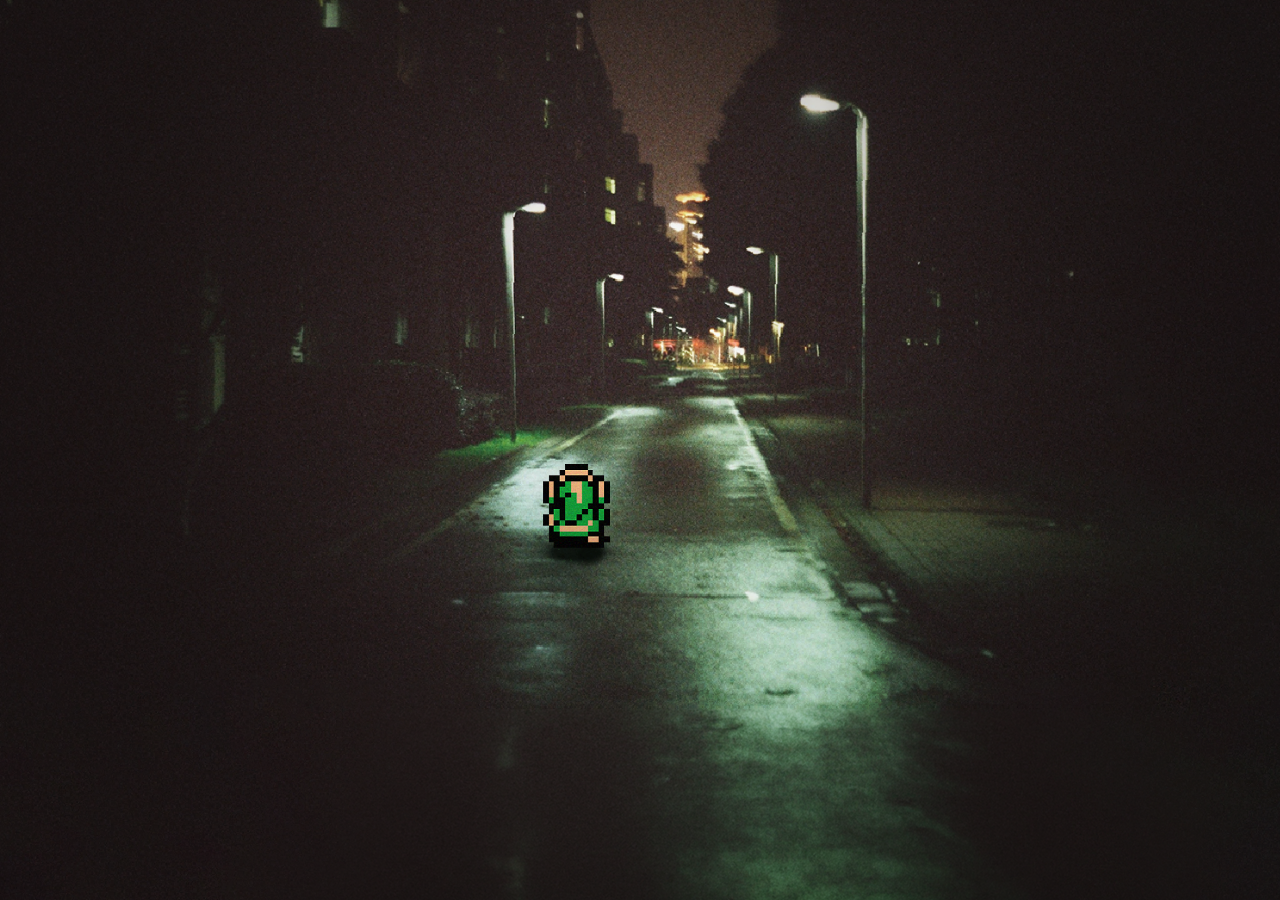
It’s night. The only light reaching the screen of my original Game Boy arrives intermittently, courtesy of overhead motorway streetlights. The lighting conditions aren’t perfect, but I’m playing Zelda and I’m smiling.
Each passing strobe of light gives me another brief glimpse of Koholint Island. A beach. A forest. A path leading somewhere I haven’t been before. Then darkness, followed by another pool of light and another few seconds of exploration.
I don’t remember arriving home. I don’t remember how far I made it that night. But all these years later, I still remember sitting in the back of that car with a Game Boy in my hands, trying to make the most of every passing lamppost.
I had gone looking for a new Game Boy game. What I found was an adventure.